

UAE Clothing Label Laws: What Must Appear on Every Garment in 2026?
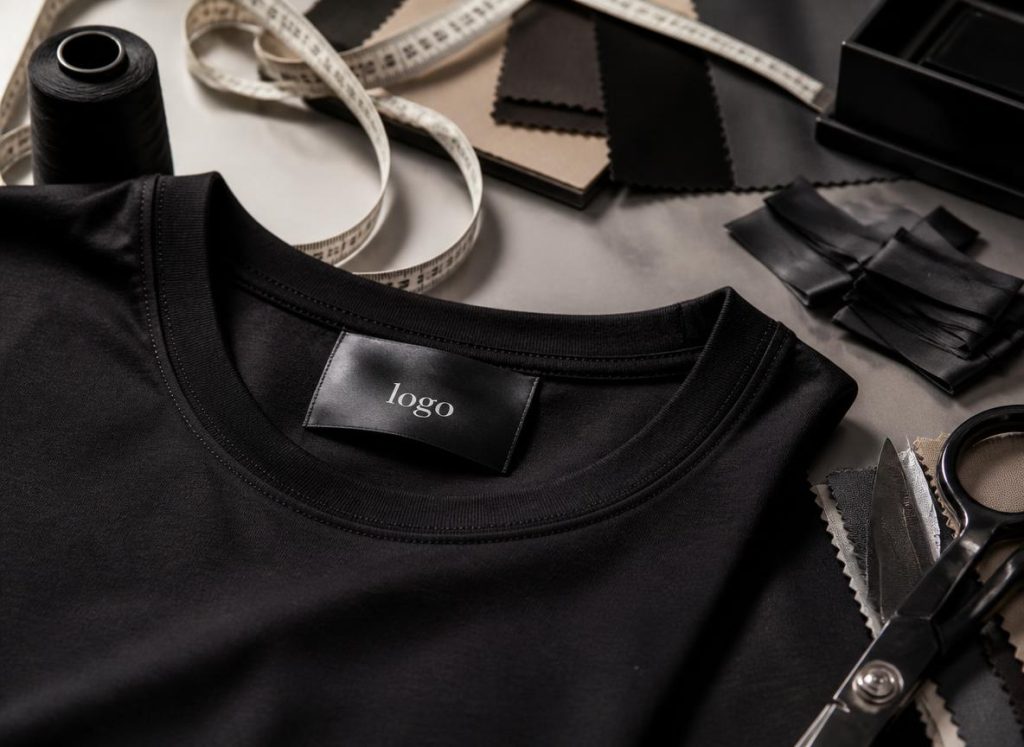
If you manufacture, import, distribute, or sell clothing in the UAE, garment labelling is more than a branding exercise.
A clothing label can provide customers with important information about the product, including what it is made from, where it was manufactured, how it should be cared for, and who is responsible for the product.
For fashion brands, boutiques, abaya businesses, uniform suppliers, private-label manufacturers, and clothing importers, getting these details right can help avoid compliance problems and improve customer confidence.
But there is an important point to understand:
There is not necessarily one identical label template that applies to every garment in every situation.
Requirements can depend on the type of textile product, applicable UAE technical regulations or standards, where and how the product is being sold, and whether additional requirements apply to a particular product category.
The UAE has an established regulatory framework for textile products, and Cabinet-level regulations cover the control of textile products. Dubai Municipality also maintains compliance controls and publishes information on non-complying textile products.
This guide explains the key information clothing businesses should consider when preparing garment labels for the UAE market in 2026.
Why Are Clothing Labels Important in the UAE?
A clothing label serves several purposes at the same time.
It can communicate:
- Product identity
- Brand identity
- Fibre composition
- Garment size
- Country of origin
- Care instructions
- Manufacturer or responsible business information
- Other information required by the applicable regulation or standard
Labels also help customers make informed purchasing decisions.
For example, a customer buying a dress may want to know whether it is made from cotton, polyester, viscose, linen, or a blend.
A customer purchasing an abaya may want to know how the fabric should be washed and whether it can be ironed.
A retailer or regulator may also need to identify the product’s origin and responsible business.
Therefore, a properly prepared label is part of both product information and compliance.
What Information Should a Clothing Label Include?
The exact requirements depend on the product and applicable regulation, so businesses should verify the rules applicable to their specific garment.
However, clothing brands selling in the UAE should generally review the following information before production.
1. Fibre or Fabric Composition
One of the most important pieces of information for a textile product is its fibre composition.
Examples include:
100% Cotton
or:
70% Cotton
30% Polyester
For another garment:
95% Polyester
5% Elastane
The composition shown on the label should accurately represent the garment.
Do not guess the percentages based on the fabric supplier’s marketing description. The information should correspond to the actual textile composition and the requirements applicable to the product.
2. Country of Origin
Country-of-origin information is another important consideration for garments sold in the UAE.
Examples include:
Made in UAE
Made in India
Made in China
Made in Turkey
The origin statement should accurately reflect the product’s applicable country of origin.
Do not use a Dubai or UAE location in a way that could make customers believe the garment was manufactured in the UAE when it was actually produced elsewhere.
For businesses importing garments, this point is particularly important.
Country-of-origin information is also a common component of consumer-product labelling requirements in UAE regulatory guidance.
3. Brand Name or Product Identification
Your brand name is an important part of garment identification.
A typical brand label might display:
BRAND NAME
Fashion companies can also include their logo or other brand identifiers.
However, businesses should distinguish between branding information and information that may be legally required for the particular product.
A beautiful logo does not replace required product information.
4. Garment Size
Customers need to understand which size they are purchasing.
Common size formats include:
- XS
- S
- M
- L
- XL
- XXL
Some brands use numerical sizing, while children’s clothing may use age or measurement-based sizing.
The important point is consistency.
If your website, hang tag, packaging, and garment label use different sizing systems without explanation, customers may become confused.
For brands selling across the GCC, it is useful to establish a consistent sizing system before starting large-scale label production.
5. Care Instructions
Care information tells customers how to look after the garment.
Depending on the garment, this may include:
- Washing instructions
- Washing temperature
- Hand-wash instructions
- Machine-wash instructions
- Bleaching restrictions
- Drying instructions
- Ironing instructions
- Dry-cleaning instructions
Care information should reflect the actual characteristics of the garment.
For example, a delicate embellished abaya should not receive the same generic washing instructions as a basic cotton T-shirt.
6. Washing and Care Symbols
Care symbols can make instructions easier to understand.
Common categories include symbols relating to:
- Washing
- Bleaching
- Drying
- Ironing
- Professional textile care
Brands should use care symbols appropriately and ensure that the symbols correspond with the written instructions and actual garment-care requirements.
A label should not tell customers to use a cleaning method that could damage the garment.
7. Manufacturer, Importer, or Responsible Business Information
Depending on the applicable regulatory requirements, additional business identification information may be necessary.
For certain regulated consumer products, UAE guidance requires manufacturer details or details of an agent acting in the UAE.
For clothing businesses, the exact information that must appear on the garment, packaging, hang tag, or accompanying documentation should be confirmed against the regulation or standard applicable to the specific textile product.
This is one reason businesses should not simply copy another brand’s label.
8. Language Requirements
Language is another important consideration for businesses selling products in the UAE.
Depending on the applicable product regulation, information may need to be provided in Arabic and/or English.
For regulated consumer products, Dubai Municipality guidance commonly specifies clear Arabic and/or English declarations.
Fashion brands should therefore determine the language requirements applicable to their specific garment before printing thousands of labels.
When in doubt, providing clear information in both Arabic and English can make product information more accessible, but businesses should still verify the exact regulatory requirement for their product category.
Do All Garments Need the Same Label?
No.
This is one of the most important points for clothing businesses.
A basic T-shirt, an embellished abaya, children’s clothing, a uniform, a textile accessory, and a specialized textile product may not be subject to exactly the same information requirements.
The applicable requirements can depend on:
- Product type
- Material
- Intended use
- Manufacturing origin
- Import status
- Applicable technical regulation
- Applicable UAE or GCC standard
- Sales channel
- Special product-category requirements
The UAE’s textile-product control framework specifically addresses textile products through applicable regulations and standards.
So instead of asking:
“What label does every garment need?”
a better question is:
“What information is required for this specific garment under the applicable UAE requirements?”
What Should an Everyday T-Shirt Label Look Like?
A simple T-shirt may have several labels rather than one oversized label.
For example:
Main Brand Label
YOUR BRAND
Size Label
M
Composition and Care Label
100% Cotton
Machine Wash
Do Not Bleach
Iron Low Heat
Origin
Made in UAE
This is only an example of how information can be organized.
The actual information should be prepared according to the garment’s material, care requirements, origin, and applicable regulations.
What About Children’s Clothing?
Children’s clothing requires additional attention because the product is intended for a particularly sensitive consumer group.
Brands should carefully review the requirements applicable to children’s textile products and make sure that:
- Fibre information is accurate
- Care instructions are correct
- Size information is clear
- Origin information is accurate
- Product-specific safety requirements are addressed
- Labels and attachments are appropriately designed
Do not assume that a label designed for an adult garment can automatically be used for children’s clothing.
What About Sportswear and Activewear?
Sportswear often uses blended or technical fabrics.
Examples include:
- Polyester
- Nylon
- Elastane
- Cotton blends
- Performance fabrics
This makes accurate composition information particularly important.
Care instructions are also important because sportswear may require specific washing and drying conditions.
For example, a technical fabric may need different care from ordinary cotton.
What About Uniforms?
School, hospitality, corporate, and industrial uniforms can also require garment identification and care information.
A uniform label might contain:
COMPANY / SCHOOL NAME
SIZE: L
65% Polyester / 35% Cotton
Made in UAE
Care Instructions
The exact requirements depend on the product and applicable rules.
For large uniform orders, it is especially important to approve the label artwork before production because thousands of garments may use the same label.
Can You Put Everything on One Label?
Technically, a business may choose to combine multiple pieces of information depending on the label format and applicable requirements.
However, putting everything on one tiny label is not always a good idea.
For example:
BRAND NAME + LOGO + SIZE + COMPOSITION + CARE + ORIGIN
can quickly become crowded.
Instead, brands often use multiple labels:
Label 1 — Brand
BRAND NAME
Label 2 — Size
L
Label 3 — Care & Composition
70% Cotton
30% Polyester
Care instructions…
Label 4 — Origin
Made in UAE
Whether information can or should be combined depends on the applicable requirements and garment construction.
Brand Labels vs. Compliance Labels
It is useful to understand the difference between branding and product information.
Brand Label
The main purpose is branding.
It may include:
- Logo
- Brand name
- Tagline
Size Label
The main purpose is identifying garment size.
Care Label
The main purpose is communicating garment-care instructions.
Composition Label
The main purpose is identifying textile fibre content.
Origin Label
The main purpose is communicating country of origin.
Some labels combine these functions, while others are separate.
For professional garment production, planning these labels separately can make the final garment cleaner and easier to manage.
Common Clothing Label Mistakes UAE Brands Should Avoid
Mistake 1: Incorrect Fabric Composition
Never print a composition percentage without confirming that it matches the actual garment.
Mistake 2: Incorrect Country of Origin
Do not confuse the brand’s location with the garment’s manufacturing origin.
A Dubai-based brand can manufacture its products in another country.
The origin statement must accurately represent the product.
Mistake 3: Generic Care Instructions
Different fabrics require different care.
Avoid using the same care label for every product in your collection.
Mistake 4: Tiny, Unreadable Text
Trying to fit too much information into a very small label can make the label difficult to read.
Mistake 5: Spelling Errors
A typo in a brand name, fabric composition, or care instruction can become expensive when thousands of labels have already been produced.
Always approve the final artwork before mass production.
Mistake 6: Copying Another Brand’s Label
Another company’s label is not necessarily legally correct for your product.
Your garment may have different:
- Materials
- Origin
- Care requirements
- Product category
- Regulatory requirements
Create the label specifically for your garment.
How to Prepare a UAE-Compliant Clothing Label
Before sending artwork to a label manufacturer, follow this checklist.
Step 1: Identify the Product
Determine exactly what you are selling.
Is it:
- T-shirt?
- Abaya?
- Dress?
- Children’s garment?
- Sportswear?
- Uniform?
- Home textile?
- Other textile product?
Step 2: Confirm the Material
Obtain accurate fibre composition information from your manufacturer or testing documentation where appropriate.
Step 3: Confirm Country of Origin
Determine the applicable country of origin for the finished product.
Step 4: Prepare Care Instructions
Use instructions appropriate for the actual fabric and garment construction.
Step 5: Determine Size Information
Choose the sizing system used by your brand and target market.
Step 6: Check Applicable Regulations
Verify the current UAE technical regulation, standard, or authority requirement applicable to your product.
This step is particularly important because regulations and standards can change.
Step 7: Create the Artwork
Prepare your:
- Logo
- Brand name
- Composition
- Size
- Care information
- Origin
- Other required information
Step 8: Review Before Production
Check every line before approving the final label.
Pay particular attention to:
- Spelling
- Percentages
- Country of origin
- Size
- Care symbols
- Arabic translation, where applicable
- Logo
- Label dimensions
Do Clothing Labels Need to Be Sewn Into the Garment?
The attachment method depends on the type of information and applicable requirements.
Common methods include:
- Sew-in labels
- Satin labels
- Woven labels
- Printed labels
- Hang tags
- Packaging information
For information that needs to remain with the garment during normal use, a durable sewn-in label is often a practical solution.
However, businesses should confirm whether a particular piece of information is required on the product itself or can be provided through another permitted means under the applicable regulation.
Satin Labels for UAE Clothing Brands
Satin labels are particularly popular among fashion brands because they combine branding with a smooth, lightweight finish.
They can be used for:
- Abayas
- Dresses
- T-shirts
- Children’s clothing
- Loungewear
- Boutique fashion
- Luxury garments
- Private-label clothing
A satin label can display:
BRAND NAME
SIZE: M
or additional information depending on the label size and purpose.
For care labels, satin provides enough surface area for detailed printed information while maintaining a soft feel.
Woven Labels for UAE Clothing Brands
Woven labels are another popular option.
They are particularly useful for:
- Brand logos
- Names
- Short messages
- Sizes
- Fashion branding
Woven labels can provide a textured textile appearance and are commonly used by fashion brands looking for a premium branding finish.
Many clothing manufacturers use a combination of:
Woven brand label + printed care label
This gives the garment a strong branded appearance while keeping detailed care information separate.
How Label Manufacturers Can Help
A professional clothing-label manufacturer can help translate your approved artwork into a practical label.
They can assist with:
- Label dimensions
- Satin or woven material selection
- Folding style
- Cutting
- Printing
- Stitching considerations
- Quantity planning
- Artwork preparation
However, a label manufacturer should not be treated as a substitute for legal or regulatory advice.
The clothing brand, manufacturer, importer, or responsible business should verify that the information supplied for production is accurate and appropriate for the product.
UAE Clothing Label Compliance Checklist for 2026
Before sending your labels to production, review this checklist:
| Information | Check |
|---|---|
| Brand name | ✓ |
| Product identification | ✓ |
| Fibre composition | ✓ |
| Country of origin | ✓ |
| Size | ✓ |
| Care instructions | ✓ |
| Care symbols | ✓ |
| Required business/manufacturer information | Check applicable requirements |
| Arabic/English information | Check applicable requirements |
| Product-specific requirements | Check |
| Label attachment | Check |
| Artwork spelling | ✓ |
| Final proof approved | ✓ |
Important: This checklist is a practical planning guide, not a complete legal checklist for every textile product sold in the UAE.
Are UAE Clothing Label Laws the Same as EU or US Label Laws?
No.
A fashion brand should not assume that a label compliant in the United States or European Union is automatically compliant in the UAE.
Different markets can have different requirements relating to:
- Fibre composition
- Country of origin
- Language
- Care instructions
- Product information
- Responsible business details
- Product-specific safety requirements
For example, the European Union has its own textile labelling framework requiring fibre-composition information for covered textile products.
If you are exporting the same garment to multiple markets, it is important to review each market’s requirements separately.
what Happens If a Textile Product Is Non-Compliant?
Businesses should take labelling seriously.
Dubai Municipality maintains a Non-Complying List of Consumer Products, which includes a category for textiles.
Dubai Municipality also explains that products subject to relevant regulations may require confirmation of conformity with applicable standards and regulations before they can be marketed or used in Dubai.
For this reason, businesses should not wait until a shipment reaches the market to discover that product information is incorrect.
Compliance should be considered during product development and before label production.
Final Thoughts: Get Your Clothing Labels Right Before Production
For UAE fashion brands, clothing labels are an important part of both product presentation and regulatory compliance.
Before producing your labels, make sure you have accurately reviewed:
- Fibre composition
- Country of origin
- Size
- Care instructions
- Brand identification
- Required business information
- Language requirements
- Product-specific requirements
- Applicable UAE technical regulations and standards
Most importantly, remember that not every garment necessarily has an identical labelling requirement.
The correct approach is to identify your product, determine which UAE requirements apply, prepare accurate information, and then choose a professional label format that can communicate that information clearly.
For brands selling in Dubai and across the UAE, investing time in correct label preparation before production can prevent costly mistakes later.
What information should appear on a clothing label in the UAE?
Is country of origin required on clothing labels in the UAE?
Do UAE clothing labels need Arabic?
Language requirements can depend on the applicable regulation and product category. Businesses should verify whether Arabic, English, or both are required for their particular product.
Do care labels need to be included on UAE garments?
Can I use the same label for all my clothing products?
Are satin labels suitable for UAE clothing?
Should I check UAE regulations before printing labels?
Need Custom Clothing Labels for Your UAE Fashion Brand?
Whether you need satin labels, woven labels, care labels, size labels, or custom garment labels, the label should be designed around your garment and information requirements.
From fashion designers and abaya brands to T-shirt businesses, uniform suppliers, and private-label clothing manufacturers, professionally produced labels can give garments a consistent and polished finish.
Planning a new clothing collection? Prepare your label information early, verify the requirements applicable to your products, and then send the approved artwork for professional label production.
